Category Archives: Birth

A doula’s challenge

Each week, I send an email to my pregnant clients.  These emails are usually for their eyes only but I thought I would share a recent one.  Note:  most of my clients (lately) are hospital births so we typically spend much of the labor in their homes.   

Restraint.  When folks ask me what is the hardest part of being a doula, I answer “restraint.”  We doulas get riled up about doctors and midwives who use unnecessary interventions.  “Humph,” we complain.  Why can’t they simply trust birth? 
 
But we are often guilty of the same thing.  When I first began as a doula, I thought I was supposed to whip out all my tricks and tools.  I figured these families were paying me to do something.  My thoughts went something like this:  “Ok, I need to do x to keep her labor from stalling.  I should do y to make sure the baby descends.  I must do z to encourage her to release more oxytocin.”  You realize what I was doing?  Using unnecessary interventions.  Maybe they were harmless and maybe they even helped but they may not have been necessary.  And sometimes, they took away power from the birthing woman. 
 
Why couldn’t I simply trust birth? 
 
Do you remember those early studies on doulas–you know, the ones that showed incredible reductions in c-sections and other interventions and incredible increases in mother satisfaction?  Most often, the mom didn’t even know she had a doula.  The doula was simply present as part of the medical team–it was a blind study.  Her mere continued presence resulted in positive outcomes.  How could that be? 
 
It is a tricky profession.  In the aftermath of a normal birth, it should feel like the doula or the midwife/doctor didn’t do anything.  Our goal should be to fade into the background of the story.   
 
Now don’t worry–this rambling doesn’t mean that I’m not going to give you nice foot massages or help you relax during your labor.  It does not mean that if I suspect any roadblocks (positioning, difficulty focusing, etc), I won’t pull out a trick or two.  But if your labor is progressing normally, sometimes the best tool I have is simply to be there.  To be a gatekeeper or lifeguard; not a director.  And yes, I struggle with this.  I want to jump in and save the day. 
 
Ah, but you don’t need to be saved.  This journey is yours and you are the hero in this adventure. 
 
Homework:  Trust is an essential element in normal birth.  Do you trust your body?  For some women, pregnancy may offer the first challenge of this sort; the first opportunity you’ve had to be awe-struck by your amazing body at work.  Practice trust and intuition by asking and listening during pregnancy.  For example, thoughtfully ask yourself questions like “how does my body want to stretch?” “should I rest now?” “what would nourish me today?”  
 
This quote was written to midwives but I think it applies to all those who are invited into the presence of birth: 
Do good without show or fuss. 
Facilitate what is happening rather than what you think ought to be happening. 
If you must lead, lead so the woman is helped yet still free and in charge.  
When the baby is born, the woman will rightly say, “We did it ourselves.” 
–from the Tao Te Ching
“Soon They’ll Be Asking for Informed Consent”

I caught that line from an overheard snippet of House M.D. recently.  Someone told House to get consent before a procedure.  He sarcastically replied something to the effect:  Start getting consent for procedures and soon they’ll be asking for informed consent.

Well there is a new tool in the informed consent workshop.  Released this week, the Milbank Report:  Evidence-Based Maternity Care Report has the US abuzz.  Consumer Reports even released a report on the findings.  One of the quotes I love in the Milbank report’s executive survey is “The many beneficial, underused practices around the time of birth include continuous labor support, numerous measures that increase comfort and facilitate labor progress, nonsupine positions for giving birth, delayed cord clamping, and early mother-baby skin-to-skin contact.”  Humph.  Nonsupine positions, delayed cord clamping, and immediate skin-to-skin are usually the most difficult concessions to get in hospital births I attend.  There is always some reason why it can’t be done. 

The sum-up of the findings seems to be hire a family practice physician or midwife to attend your birth, hire a doula, and know which processes are evidence-based.  Not sure how to discern evidence-based practices?  I usually go first to the Cochrane Database of Systematic Reviews.

Warning

Read only if you want to get red in the face and throw something. 

http://  medpolitics.com/content/How-I-and-my-OB-colleagues-Swindle-Patients-Thinking-That-Their-Decisions-Make-Any-Sense

I broke the link; you’ll have to remove the spaces.

The Gamut

Two back-to-back births that ran the gamut.  One striking difference was the OB management of delivery. 

Dr. Masked Man:  He showed up only when baby was crowning.  He involved a surgical tech who draped the mom’s legs and torso in blue sterile paper.  To hold her legs, I had to fight with the ridiculous paper and I did get “the look” from the tech when I rubbed the mom’s thigh over the paper.  The dr. wore a surgical mask, a face shield, a scrub cap, long gloves, full scrubs, and boots.  It could have been anybody under that getup!  The surg tech kept pouring soapy water on the mom without warning and scrubbed her down with antiseptic.  The room was bright and filled with people.  When baby was born, dr. immediately clamped the cord.  Baby was held up (for the photo shot maybe?) and then handed to a nurse for twelve million footprints and procedures.  Then dr. applied strong cord traction for the placenta. 

Dr. Polo Shirt:  Wore casual “street clothes.”  Called the mom by name.  In fact, he called all of us by name.  The room was dim and the only other person was the nurse.  When baby was born, dr. handed her to the mom.  He patiently waited for the cord to stop pulsing while the mom breastfed.  Cord clamped (and cut by me–my first!), mom cleaned up, and dr. patiently waited for the placenta.  He quietly respected the postpartum time by slipping out of the room.  He came back later to quietly bid us all goodnight.   

Which would you choose?  And how would a newly pregnant mom know to even ask the questions to find the right choice? 

A Perfect Posterior

I had a rather unusual birth recently.  A speedy birth.  Four hours, in fact.  The client arrived at the hospital at 9cm and had a baby an hour later.  So what was unusual about this birth?  The baby was posterior; born facing the sky.  And none of us had any idea that was coming. 

Usually the first clue that a baby is posterior is long labor or prolonged pushing.  Or back labor.  My client had none of these.  Her body must like posterior babies.  Some women have an anthropoid pelvis (oblong) and handle posterior babies with ease.  She pushed for only 40 minutes in the hospital “curl around yourself” semi-sitting position.  I imagine this length would have been even shorter if she had been vertical or on hands and knees. 

My favorite part about this birth is that the baby latched on 5 minutes after birth and remained actively nursing for 20 minutes.  It was beautiful.  I am so proud of this strong woman who handled a hard, fast labor with ease.

Chewing on a Piece of Grass

I realized something recently.  I always listen to Ventura Highway on my way to a birth or prenatal/postpartum appointment.  What is that all about?  The song relaxes me so maybe it is my subconscious attempt to encourage oxytocin–the love hormone?  Or maybe I’m self-medicating?  My sister (the counselor) teased me recently by “diagnosing” me with a social phobia.  Synthetic oxytocin is currently being studied as a treatment for social phobia.  Still, who needs oxytocin nasal spray when you can listen to America?

At least I think she was teasing me…

It is here.

Posted on

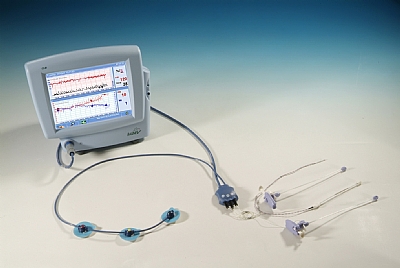
We’ve heard whispers about it.  We’ve cringed at the very thought of it.  And it is now on the market.  The super-dooper do-it-all gadget that will revolutionize birth (and malpractice) has arrived.  Duh-duh-duh-dummmmmmb:  BirthTrack–a monitor that clips to the mom’s cervix providing constant monitoring of every move and every inch of progress.   

Check out this post that sums up all of BirthTrack’s fancy features and glaring problems.  As my friend, Carey, so cleverly noted–too bad they didn’t think to design it with an MP3 player for mom’s and baby’s listening pleasure.   

Charlotte Church and Ricki Lake?

Posted on

What do they have in common?  They have both been singled out by the medical community as influencing women to have homebirths.  The difference?  While Ricki Lake was raked across the coals by the AMA and ACOG, Charlotte Church is being upheld as a role model.  In fact, the Welsh Assembly Government had a goal to INCREASE home births by 10%.  Welsh homebirths have, in fact, increased 25%! 

Isn’t it interesting that while American medical groups are making resolutions to outlaw homebirths, their peer group across the Atlantic are trying to increase homebirths?  And isn’t it interesting which countries have the best outcomes?  Did you know a mom or baby is more likely to die in childbirth in the US than in Europe (or even Havana!)?  

Doesn’t the AMA have bigger issues than the 1% of US babies born at home?

A Little Gem I Found

Posted on

While scrounging around my parent’s house, I found the 1966 edition of De Lee’s Obstetrics for Nurses.  Interesting reading and frightening pictures.  Here are a few tidbits:

  • The introduction praises the fact that “99% of whites and 85% nonwhites now give birth in hospitals” while the next paragraph expresses fear at the scarcity of OBs and the “coming avalanche of babies.”
  • There is pointedly no mention of midwives and those mostly “nonwhites” who give birth outside of hospitals do so “unattended.”
  • Aside from the rising birth rate, the other great problem is infant mortality.  It is a “stinging realization that 15 countries have lower infant mortality than the United States.”  (ahem, we have slipped still lower on the list) 
  • “Most mothers complete their families by age 30.”
  • “It is the nurse who is the constant attendant of the woman in labor.”
  • I found it interesting that gentian violet was the only treatment mentioned for yeast infection during pregnancy.  How could the poor pharmaceutical company make any money if that was still prescribed? 
  • The ideal weight gain is 15-20 lbs and each pregnant mom must closely monitor her water and salt intake. 

I’m sure I’ll add more morsels of De Lee as I skim along.  The best part is reading my mom’s notes in the margins. 


Ruffled Feathers

Posted on

I’m sure most of you know about the AMA resolution already.  Quick sum-up:  the medical trade organization has joined with ACOG to pursue legislation for “safe birth.”  Safe birth, of course, being birth supervised by a doctor.  The funny part is that the resolution targets Ricki Lake for daring to discuss her homebirth on the Today show.  So Ricki has responded and I wanted to link the article

I’m really sick of reading homebirth debates.  Same old anecdotes, statistics, ignorance being tossed about.  The discussion should be about choice.  And it isn’t like families are choosing homebirth in droves!  We’re talking about a small segment of the population.  Shouldn’t the AMA be worrying about cancer, insurance, MSRA, or some other big fish?  It is really amusing that the AMA/ACOG is so ruffled about midwives.      

ETA:  Today the AMA voted to remove references to Ricki Lake from their resolution.  I guess they didn’t think anyone was paying attention?